Embankment Erosion Control — Riverbank & Embankment Stabilisation in East Sussex & Kent
If your riverbank, ditch bank, or embankment is eroding, slumping, or being undermined by water, you need embankment erosion control. Based in Battle, East Sussex, we design and install embankment erosion control and bank stabilisation for landowners, farmers, and estates across Kent and East Sussex. We own our own excavators and plant, so we handle the full process from assessment through to installation and reinstatement.
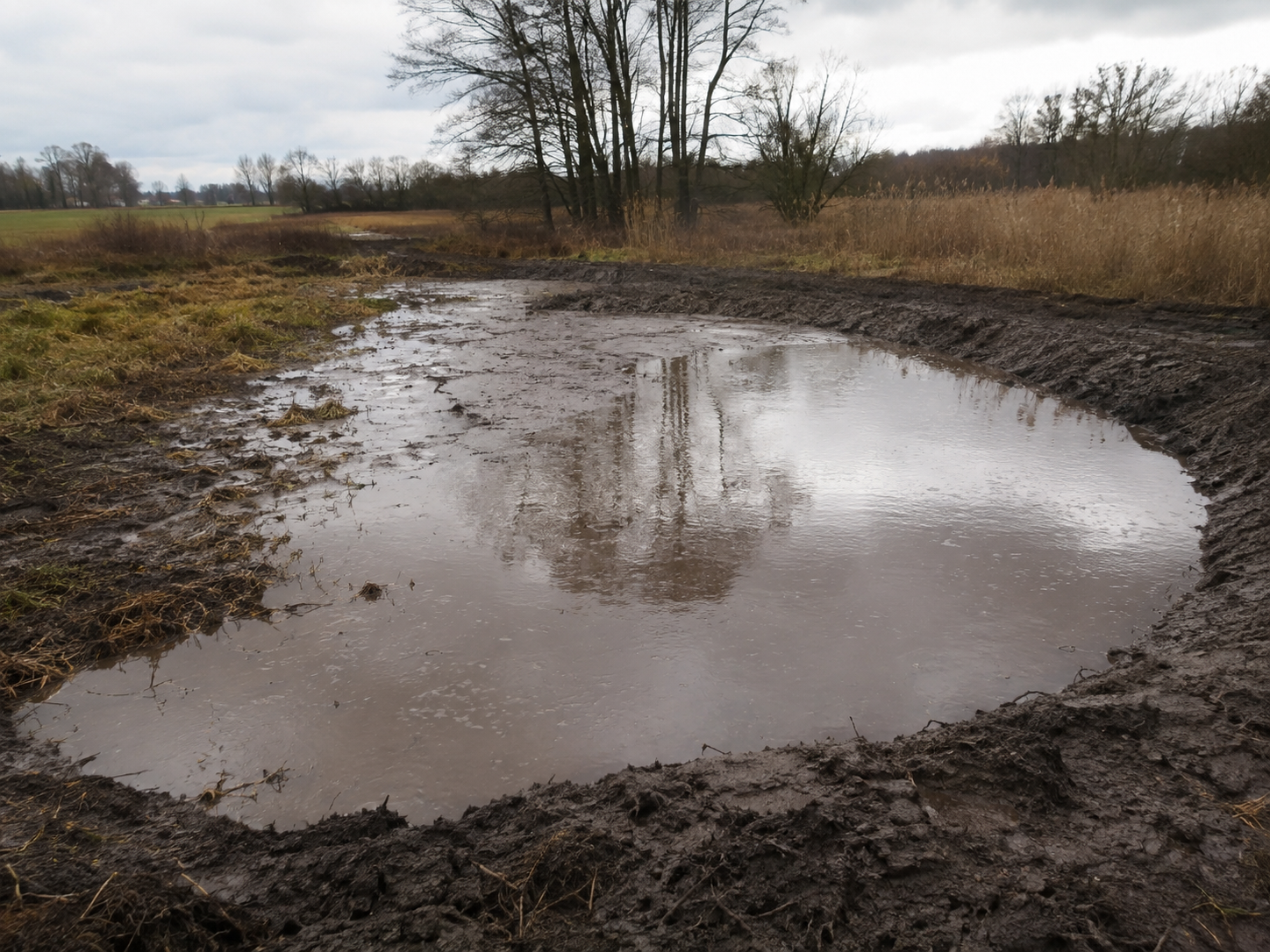
Embankment erosion claims land, undermines boundaries, and causes flooding. Along the rivers and streams of the South East — the Rother, Brede, Cuckmere, Ouse, and their tributaries — erosion is accelerated by rising water levels, heavy rainfall, and the loss of bank vegetation. Without intervention, erosion can claim metres of land per year and lead to channel failure and flooding.
What Causes Embankment Erosion
Water flow is the primary cause of embankment erosion. Fast-flowing water scours the bank, particularly on the outside of bends where the current is strongest. As the water undercuts the bank, the material above slumps into the channel, carrying land with it. The bank retreats, the channel widens and shallows, and the flooding gets worse.
Wave action and water level fluctuation also erode banks. Rising and falling water levels — increasingly common with the extreme weather events hitting the South East — saturate and weaken bank material, causing slumping. Wave action from wind on wider rivers and lakes also erodes banks, particularly on exposed shorelines.
Vegetation loss and livestock poaching are the third factor. When bank vegetation is removed — by overgrazing, mowing, or shading from trees — the bank loses its root structure and becomes vulnerable to erosion. Livestock poaching (trampling) breaks down the bank surface, accelerating erosion. A bare, poached bank erodes far faster than a vegetated one.
Our Embankment Erosion Control Solutions
We carry out bank reprofiling — excavating the eroded bank to a stable angle (typically 1:2 to 1:3) and reinstating with compacted fill. Reprofiling is the foundation of most erosion control: a bank at a stable angle resists erosion far better than a steep, undercut bank. We combine reprofiling with reinforcement where the flow rate or bank height requires it.
We install bank reinforcement — geotextile stabilisation, riprap (stone placement), gabion baskets, and live willow revetment (willow spiling). Geotextile reinforces the bank material; riprap and gabions provide hard armour against scour; willow revetment provides a natural, living reinforcement that grows stronger over time. We match the technique to the site, the flow rate, and the bank material.
We also carry out re-vegetation — planting deep-rooted native species that bind the bank material and resist erosion. Re-vegetation is the long-term answer to embankment erosion: a well-vegetated bank is self-reinforcing and far more resilient than a bare one. All erosion control work is carried out with our own excavators and plant. We're based in Battle, East Sussex and cover all of Kent and East Sussex. Call us on 07376 622637 for a free embankment erosion control quote.
Services That Solve This Problem
Related Problems We Solve
Frequently Asked Questions
What is embankment erosion control?
Embankment erosion control is the set of techniques used to stabilise eroding riverbanks, ditch banks, and embankments — including bank reprofiling, geotextile reinforcement, riprap, gabions, willow revetment, and re-vegetation. We carry out embankment erosion control across Kent and East Sussex.
How do you stabilise an eroded riverbank?
We start by reprofiling the bank to a stable angle, then reinforce it with geotextile, riprap, gabions, or willow revetment depending on the flow rate and bank material. Finally, we re-vegetate with deep-rooted native species to provide long-term stability. We assess the site and recommend the best combination of techniques.
What is willow revetment?
Willow revetment — or willow spiling — is a natural bank reinforcement technique using living willow stakes and woven willow branches to create a living wall that stabilises the bank. As the willow grows, its roots bind the bank material and the revetment becomes stronger. It's a sustainable, wildlife-friendly alternative to hard engineering.
Do you need permission to repair an eroded riverbank?
Many rivers and main watercourses require consent from the Environment Agency or the Lead Local Flood Authority before bank repairs. Ordinary watercourses are usually the landowner's responsibility. We can advise on the consents required for your watercourse and carry out the work in accordance with the conditions.
Need Help With This Problem?
Call us for a free quote. Based in Battle, East Sussex — covering Kent and East Sussex. We respond within 24 hours.