Rainwater Management — Harvesting, Attenuation & Surface Water Control in East Sussex & Kent
Rainwater management is the controlled handling of rain where it falls — harvesting it for use, attenuating it to prevent flooding, and conveying it safely away. As rainwater management contractors based in Battle, East Sussex, we design and install rainwater management systems for homes, farms, and development sites across Kent and East Sussex. We own our own excavators and plant, so we handle the full process from design through to installation.
Climate change is bringing heavier, more frequent rainfall to the South East, and traditional drainage — which simply pipes rainwater away as fast as possible — is no longer enough. Modern rainwater management slows, stores, and reuses rainwater, reducing flood risk, providing a free water source, and meeting the SuDS requirements that planning authorities now demand for new development.
Why Rainwater Management Matters
Flooding is the most obvious reason. When heavy rain falls on impermeable surfaces — roofs, driveways, fields with clay soil — the runoff overwhelms drains, ditches, and watercourses, causing flash flooding. On the Wealden clay of Kent and East Sussex, the ground can't absorb the water, so it runs across the surface, collecting and flooding. Climate change is making these events more frequent and more severe.
Water scarcity is the other side of the coin. The South East is officially water-stressed, with rising demand and diminishing summer rainfall. Rainwater that once caused flooding in winter is increasingly valuable in summer, when gardens, crops, and livestock need water. Rainwater harvesting captures winter rainfall for summer use, reducing demand on mains water.
Planning requirements now mandate rainwater management for most new development. SuDS (Sustainable Drainage Systems) — which manage rainwater close to source through infiltration, attenuation, and reuse — are a planning condition for major developments, and the Lead Local Flood Authorities for East Sussex and Kent set the requirements. Getting rainwater management right is essential for planning approval.
Our Rainwater Management Services
We design and install rainwater harvesting systems — capturing roof water in storage tanks for garden, agricultural, or non-potable use. Systems range from simple water butts and above-ground tanks for gardens to large below-ground tanks for farms and estates. Harvested rainwater reduces mains water use, lowers water bills, and reduces surface water runoff.
We install rainwater attenuation systems — below-ground crate tanks or above-ground basins that store rainwater during heavy rainfall and release it slowly to a watercourse or sewer. Attenuation is the standard approach on clay soils where infiltration isn't possible, and it's a key component of SuDS for development sites. We size attenuation systems correctly for the drainage area and the discharge rate.
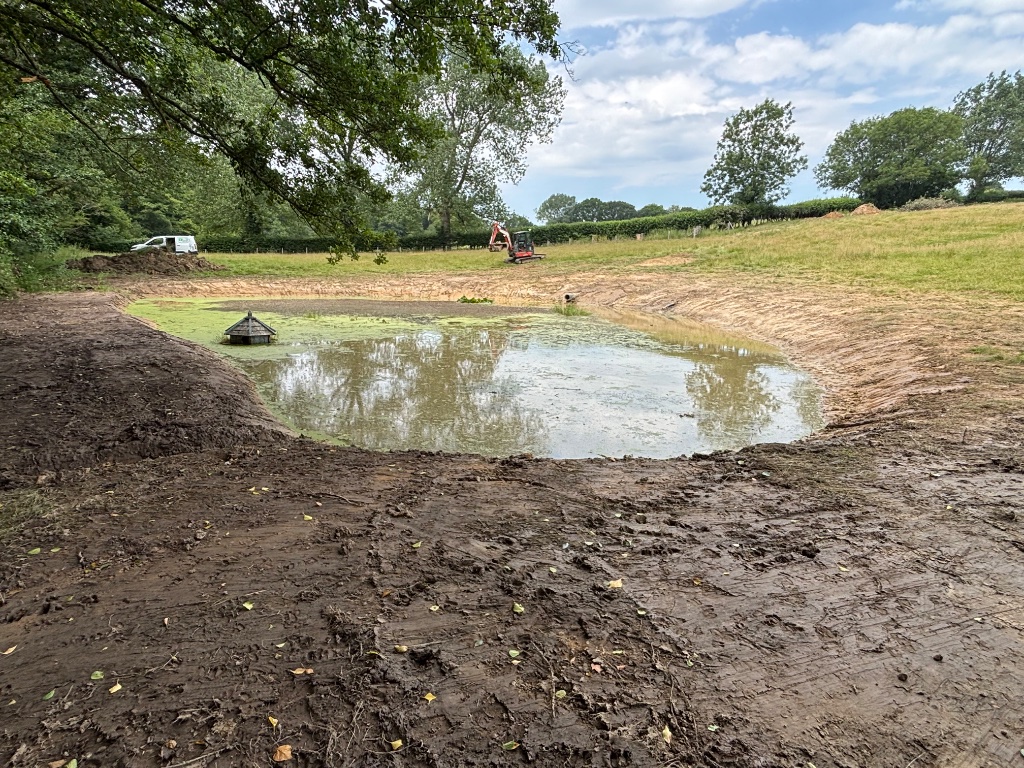
We also install the full range of SuDS components — soakaways, infiltration trenches, swales, permeable paving sub-bases, and retention ponds — and the rainwater drainage systems (channels, French drains, land drainage) that feed them. All rainwater management work is carried out with our own plant. We're based in Battle, East Sussex and cover all of Kent and East Sussex. Call us on 07376 622637 for a free rainwater management quote.
Services That Solve This Problem
Related Problems We Solve
Frequently Asked Questions
What is rainwater management?
Rainwater management is the controlled handling of rain — harvesting it for use, attenuating it to prevent flooding, and conveying it safely away. It includes rainwater harvesting, attenuation, SuDS, and surface water drainage. We design and install rainwater management systems across Kent and East Sussex.
What is the difference between rainwater drainage and rainwater management?
Rainwater drainage conveys rainwater away as fast as possible — the traditional approach. Rainwater management is broader: it slows, stores, and reuses rainwater, reducing flood risk and providing a water resource. Modern planning requires rainwater management rather than simple drainage.
How does rainwater harvesting work?
Rainwater harvesting captures roof water via downpipes, filters it, and stores it in a tank — above ground for small systems, below ground for larger ones. The stored water is then pumped for garden, agricultural, or non-potable use. We install rainwater harvesting systems across Kent and East Sussex.
What is rainwater attenuation?
Rainwater attenuation stores rainwater during heavy rainfall and releases it slowly to a watercourse or sewer, preventing downstream flooding. It's the standard approach on clay soils where infiltration isn't possible, and a key component of SuDS for development sites.
Need Help With This Problem?
Call us for a free quote. Based in Battle, East Sussex — covering Kent and East Sussex. We respond within 24 hours.