Flooded Land? Soil Compaction, Drainage & Water Management Solutions
If your land floods every time it rains — whether it's a garden, paddock, field or development site — the problem almost always starts below the surface. Across Kent, East Sussex and Surrey, the combination of heavy clay soils, compacted ground and inadequate drainage turns rainfall into standing water that damages land, kills plants, and makes ground unusable for months at a time.
As specialist land drainage and water management contractors based in Battle, East Sussex, we don't just install pipes — we diagnose the underlying soil and ground conditions that cause flooding in the first place, then design a complete water management system that moves water off your land and keeps it off. From French drains and perforated pipe installations to retention ponds and attenuation systems, we solve flooded land at the source.
What Causes Land to Flood?
Flooding is rarely caused by one single issue. It's usually a combination of soil type, ground condition, topography and drainage capacity — and understanding which of these is driving your flooding is the key to fixing it permanently rather than patching it year after year.
Soil type is the first factor. The Weald of Kent and East Sussex sits on heavy clay — a soil with extremely low permeability that holds water rather than letting it drain through. When rain falls on clay, the water sits on the surface or just below it, creating the standing water and boggy ground that characterises flooded land across the South East. Chalk soils drain more freely but can still flood if the water table is high, while compacted sand and silt soils lose their natural drainage capacity entirely.
Soil compaction is the second — and often overlooked — cause. Livestock trampling, machinery traffic, construction work, and even foot traffic on wet ground compress the soil particles together, squeezing out the air spaces that allow water to drain through. Compacted ground is effectively sealed — water runs off it rather than soaking in, exactly like concrete. On agricultural land, compaction from heavy machinery and livestock is the single biggest contributor to flooding after clay soil type. On development sites, compaction from construction plant creates the same problem on a smaller scale.
Inadequate or failed drainage is the third factor. If your land has an old drainage system with collapsed or silted-up pipes, blocked ditches, or no drainage system at all, the water has nowhere to go. Many fields and estates across Kent and East Sussex have clay drainage pipes that are 50+ years old and no longer functioning. On development sites, the original surface water drainage may not have been designed for the volume of water the site now receives.
The result is the same regardless of the cause: standing water, boggy ground, damaged grass and crops, waterlogged gardens, flooded access routes, and land that's unusable for weeks or months after each rainfall. And the longer the problem is left, the worse the compaction becomes — wet ground compacts more easily, which holds more water, which causes more flooding. It's a cycle that only gets worse without intervention.
How We Solve Flooded Land
We take a diagnostic approach to flooded land — we don't just install pipes and hope for the best. We assess your soil type, ground compaction, slope, water sources and existing drainage, then design a complete water management system that addresses the root causes of your flooding, not just the symptoms.
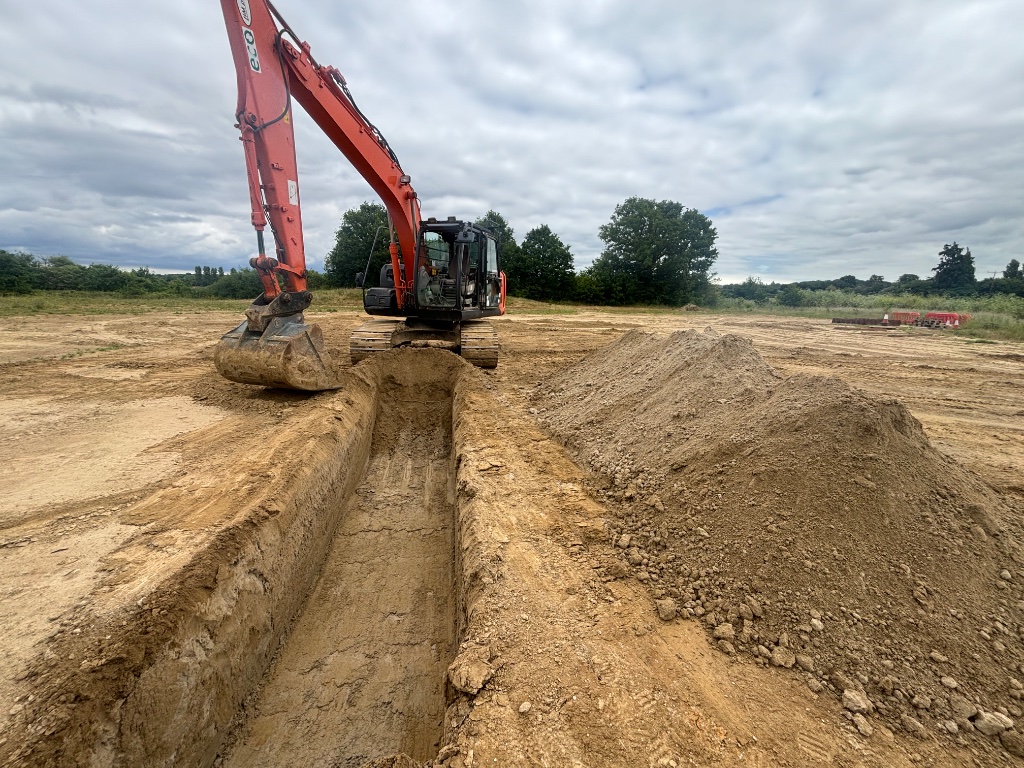
French drains are often the first line of defence. These gravel-filled trenches intercept surface water and groundwater as it moves across or through your land, collecting it and channelling it to a safe outfall. We install French drains along boundaries, at the base of slopes, around buildings and gardens, and at the edges of fields — wherever water is entering or accumulating. For Kent's chalk and East Sussex's clay soils, we engineer the drain depth, gravel grade and pipe specification to suit the ground conditions and water volume.
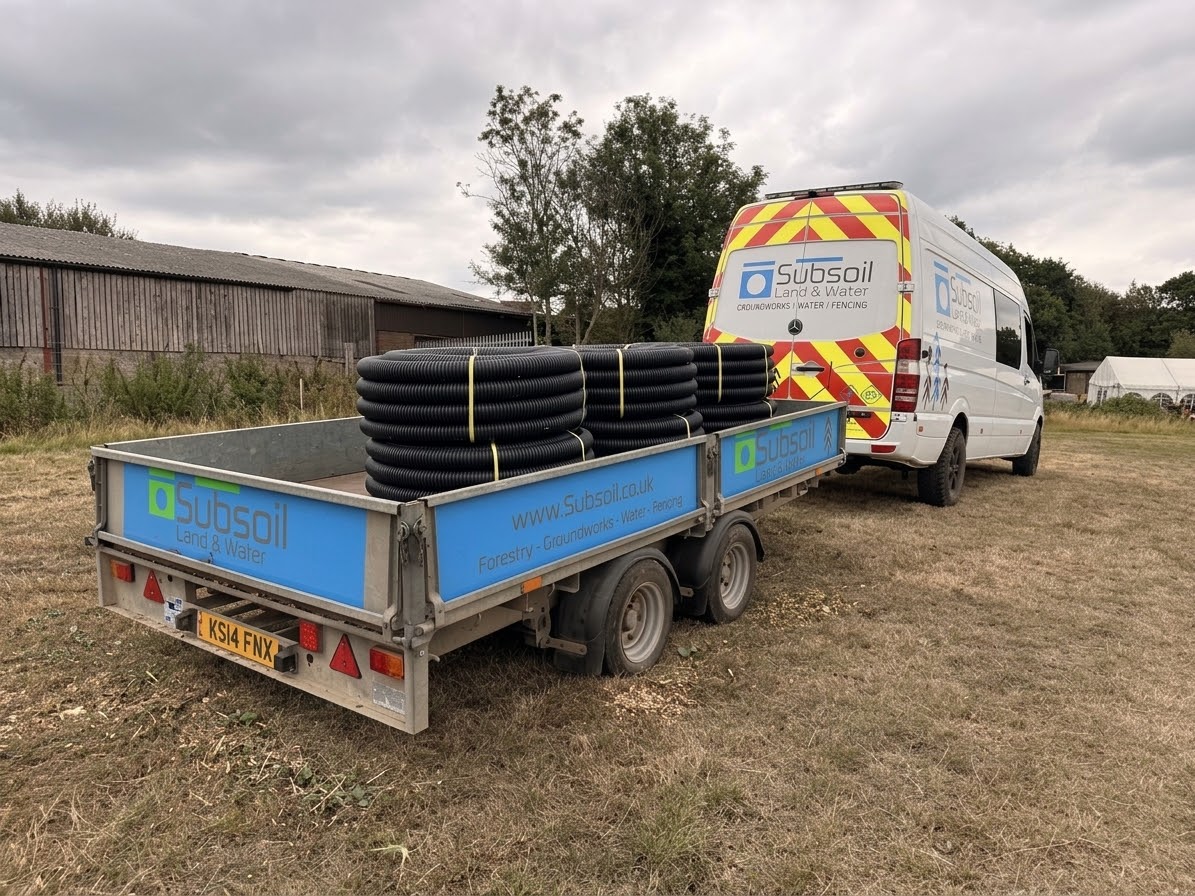
Perforated drainage pipe installations are the backbone of most field and large-scale drainage systems. We lay perforated pipes in herringbone or grid patterns across the wettest areas, wrapped in geotextile membrane and surrounded by clean drainage stone, to collect water from the soil and carry it to a ditch, watercourse or soakaway. The pipes are installed at the correct gradient to ensure water flows freely, and at the correct depth for the soil type and land use — deeper for agricultural land, shallower for gardens and paddocks.
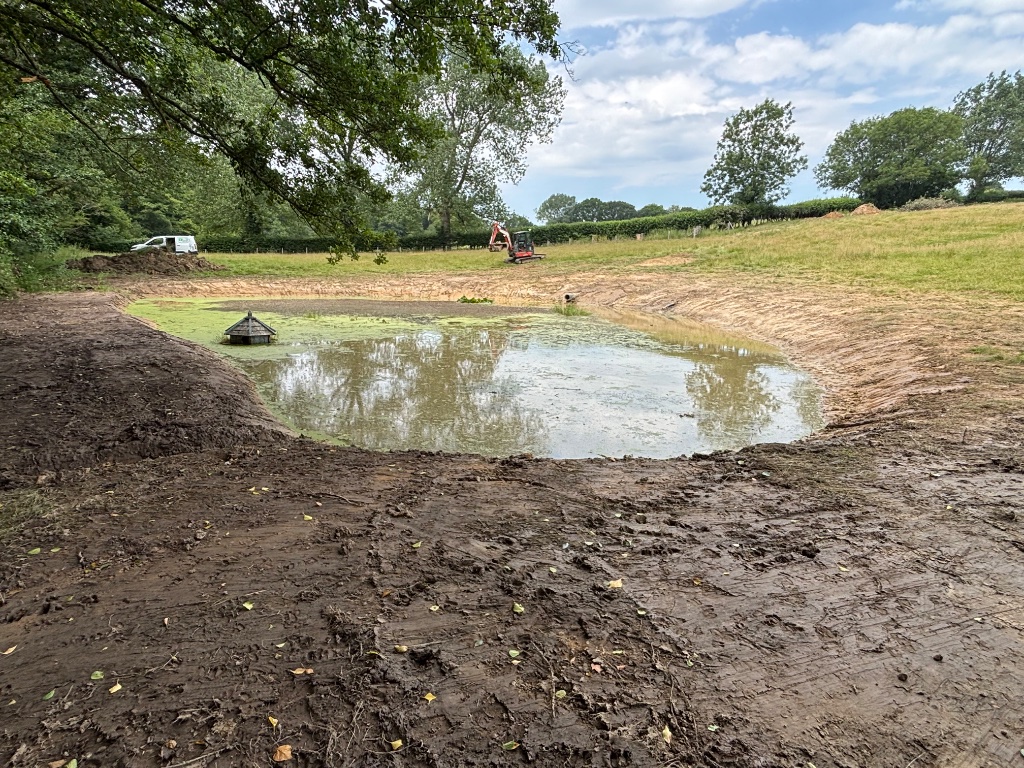
Retention ponds and water management systems are the solution when the problem is volume — when there's simply too much water to drain away through pipes alone. We design and construct retention ponds, attenuation basins and SuDS-compliant water management systems that capture surface water runoff during heavy rainfall and release it slowly and controlled into the ground or a watercourse. These systems are increasingly required for development sites under planning regulations, and they're equally effective for agricultural and estate land that experiences seasonal flooding.
Soil decompaction and subsoiling address the root cause when compaction is the primary issue. We use deep subsoiling and ripping techniques to break up compacted layers and restore the soil's natural drainage capacity — shattering the compacted pan that's holding water and allowing it to drain through the soil profile again. This is particularly effective on agricultural land where machinery and livestock compaction has sealed the surface, and it's often combined with pipe drainage for a complete solution.
Soakaways and attenuation crates provide on-site water storage where there's no convenient ditch or watercourse for outfall. We install crate-based soakaway systems sized to your rainfall and soil conditions, allowing collected water to disperse slowly into the ground. For clay soils where ground dispersal is limited, we combine soakaways with overflow to surface water management systems.
Swales, ditches and watercourse clearance complete the system. We excavate and reshape swales and drainage ditches to create surface water channels that direct flow away from flooded areas, and we clear and maintain existing ditches and watercourses that have become blocked with silt, vegetation or debris. Every component works together — French drains collect, perforated pipes carry, retention ponds store, ditches and swales channel, and soakaways disperse — creating a complete water management system that keeps your land dry and usable year-round.
Related Problems We Solve
Frequently Asked Questions
What causes land to flood in Kent and East Sussex?
Land in Kent and East Sussex typically floods because of three factors working together: heavy clay soil with low permeability that holds water rather than draining it, compacted ground from livestock, machinery or construction that seals the surface, and inadequate or failed drainage systems. We diagnose which combination is causing your flooding and design a solution that addresses each factor.
How does soil compaction cause flooding?
Soil compaction squeezes out the air spaces between soil particles that allow water to drain through. Once compacted — by livestock, machinery, construction or foot traffic — the ground becomes effectively sealed, like concrete. Water runs off it rather than soaking in, creating standing water and flooding. We break up compaction with deep subsoiling and combine it with drainage installation for a permanent fix.
What is a French drain and how does it help with flooded land?
A French drain is a gravel-filled trench, typically containing a perforated pipe, that intercepts and collects surface water and groundwater as it moves across or through your land. The gravel allows water to enter the drain quickly, and the pipe carries it to a safe outfall. French drains are installed along boundaries, at the base of slopes, and around buildings — wherever water is entering or accumulating.
What are perforated drainage pipes and how are they installed?
Perforated drainage pipes are corrugated or smooth pipes with holes that collect water from the surrounding soil. We install them in trenches wrapped in geotextile membrane and surrounded by clean drainage stone, laid in a herringbone or grid pattern across the wettest areas. The pipes collect water from the soil and carry it to a ditch, watercourse or soakaway at the correct gradient for free flow.
What is a retention pond and when do you need one?
A retention pond is a designed basin that captures surface water runoff during heavy rainfall and stores it, releasing it slowly and in a controlled way into the ground or a watercourse. Retention ponds are needed when the volume of water exceeds what pipe drainage alone can handle — on development sites, large agricultural fields, and land that experiences seasonal or storm-event flooding. They're also increasingly required under SuDS planning regulations.
Can you fix a flooded garden as well as agricultural land?
Yes. We solve flooding on gardens, paddocks, fields, estates and development sites across Kent, East Sussex and Surrey. The approach scales — a flooded garden may need a French drain and soakaway, while a flooded field may need a full perforated pipe system with retention pond and ditch clearance. We assess your land and design the right solution for the scale of the problem.
How long does it take to fix flooded land?
It depends on the size of the area, the severity of the flooding, and the solution required. A garden French drain system can be installed in a day or two, while a full field drainage system with retention pond may take a week or more. We provide free site visits and quotes across Kent, East Sussex and Surrey — call us on 07376 622637 to arrange yours.
Which areas do you cover for flooded land drainage?
From our base in Battle, East Sussex, we cover Kent, East Sussex and Surrey — including Battle, Hastings, Bexhill, Eastbourne, Tunbridge Wells, Cranbrook, Hawkhurst, Tenterden, Hailsham, Heathfield, Rye, Lewes, Robertsbridge, Lingfield, Oxted, Godstone, Redhill, Reigate, Dorking and all surrounding towns and villages.
Need Help With This Problem?
Call us for a free quote. Based in Battle, East Sussex — covering Kent and East Sussex. We respond within 24 hours.